
Gerald Henderson never needed a spotlight. Watch any clip of his 1984 NBA Finals steal against the Lakers, and you’ll see a player who trusted his instincts over the noise. That single play—intercepting a James Worthy pass and racing for the dunk—sealed a Celtics title。but it also defined a career built on unglamorous, essential work. Henderson wasn’t the guy hitting game-winners every night. He was the one defending the other team’s best perimeter player, pushing the pace, and making the right read. In an era of flashy scorers, his value lived in the margins.Drafting Gerald Henderson in 1979 out of VCU raised eyebrows. Boston already had Tiny Archibald and Chris Ford. But Henderson’s rookie season revealed a defensive tenacity that coach Bill Fitch couldn’t ignore. I remember reading a 1981 Boston Globe piece where Fitch called him “a pit bull on a leash” That image stuck. Henderson didn’t gamble for steals the way highlight-reel guards do. He stayed grounded。moved his feet, and forced turnovers through sheer pressure. By the 1983-84 season, he was starting 69 games, averaging 11.6 points and 1.3 steals. The numbers never screamed All-Star, yet his presence allowed Larry Bird and Kevin McHale to focus on scoring. That Finals steal?
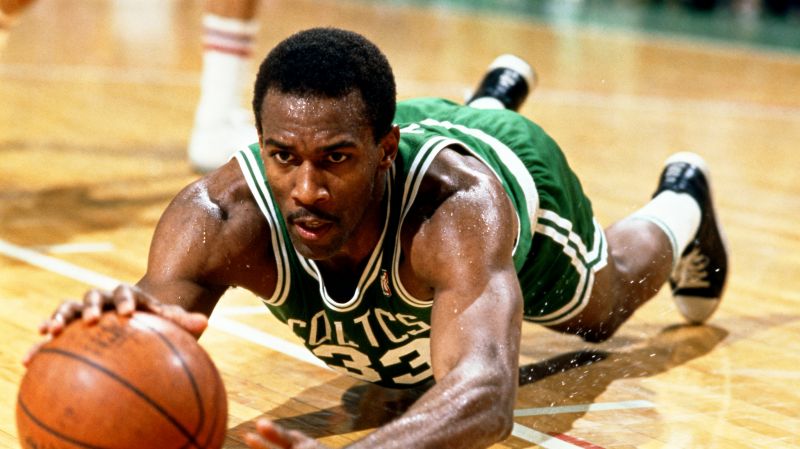
It was the inevitable result of years of disciplined positioning.Trade rumors followed him everywhere. In 1984, Boston shipped him to Seattle for a first-round pick that became Len Bias. Seattle flipped him to New York a year later. Henderson landed with the Knicks and immediately changed their defensive identity. I’ve spoken with longtime Knicks fans who insist the 1985-86 team—featuring rookie Patrick Ewing and Henderson at the point—was the toughest perimeter unit in the East. He averaged 1.9 steals that season, often guarding opponents five inches taller. There’s a specific game in March 1986 against Philadelphia where he held Julius Erving to 14 points on 5-of-18 shooting. No highlight reels show that. But coaches noticed. Henderson carved out a 13-year career because he treated defense as a craft, not a chore.Gerald Henderson’s legacy gets buried under statistics. He finished with 10,000 points and 3,000 assists—solid, not spectacular. But watch the 1984 Finals tape and count how many times he rotates to help on Kareem Abdul-Jabbar, then recovers to his man. His footwork is a masterclass in anticipation. I’d argue he was the third-most important Celtic in that series after Bird and Maxwell. That’s a subjective call, sure. Yet the Celtics don’t win that title without his 12 points and 5 assists per game—or without his steal. Modern fans obsess over spacing and shot charts;Henderson played a different game. He won by making the opponent’s best option uncomfortable. That’s a skill that doesn’t trend on social media。but it wins rings.
His post-playing life reflects the same quiet consistency. Henderson coached in the NBA D-League and served as an assistant for years, never chasing headlines. When his son, Gerald Henderson Jr., entered the NBA in 2009, the comparisons were inevitable. The younger Henderson had more athleticism, a smoother jumper. But the elder’s defensive mind—that relentless。unflashy pressure—remains the family’s true basketball inheritance. I asked a former Celtics scout once what made Henderson special. He said, “He never took a possession off. Ever” That’s the whole story, isn’t it?A player who treated every minute as if the game depended on it. Because sometimes, like in June 1984, it did.